







Understand the difference between factory-correct and custom muscle car restorations — and which route is right for you.
Introduction: Originality vs. Personality
If you’ve spent any time in the muscle car world — at shows, auctions, or scrolling enthusiast forums — you’ve seen the phrase “factory correct” thrown around like a badge of honor. For some, it’s the holy grail of restoration. For others, it’s a limiting checklist that takes the fun out of the build.
So what does factory correct really mean? And more importantly — does it matter for your project?
At Restore a Muscle Car, we work with both purists and customizers. This post will walk you through the meaning, significance, and trade-offs of a factory-correct muscle car restoration — so you can decide if sticking to the script is right for you, or if writing your own story makes more sense.
What Does “Factory Correct” Mean?
A factory-correct restoration aims to return a classic vehicle to exactly the way it was built when it left the assembly line — as if it rolled out of the showroom yesterday.
That includes:
Correct engine, transmission, and rear axle codes (preferably “matching numbers”)
Original paint and trim combinations based on the cowl or trim tag
Correct interior materials and configurations
Date-coded parts — from the carburetor to the radiator cap
OEM-style fasteners, wiring, and finishes in the engine bay and undercarriage
It’s not just about making the car look original — it’s about building historical accuracy into every nut and bolt. This kind of restoration is often referred to as “concours-level” or “numbers-matching,” especially when judged at car shows or classic vehicle competitions.
VIN Decoding, Color Codes, and Component Verification
One of the first steps in a factory-correct build is decoding the car’s identity. Here's what that process typically includes:
🔎 VIN & Trim Tag Decoding
The VIN (Vehicle Identification Number) tells you the model year, assembly plant, body style, engine type, and sequential production number.
The trim tag or cowl tag on GM cars reveals original paint code, interior trim, and options like air conditioning or bucket seats.
For Mopars, fender tags provide a similar wealth of data.
At RAMC, we use trusted resources to decode this information and verify what the car should have been equipped with originally.
🧩 Date-Coded Components
Original muscle cars had parts stamped with dates — from engine block castings to alternators and glass.
A factory-correct restoration seeks out or retains components built within 30–90 days of the car’s assembly date.
This can involve sourcing NOS (new old stock) or carefully restored OEM parts that fit the build window.
Having these correct codes adds credibility — and often value — to the restoration.
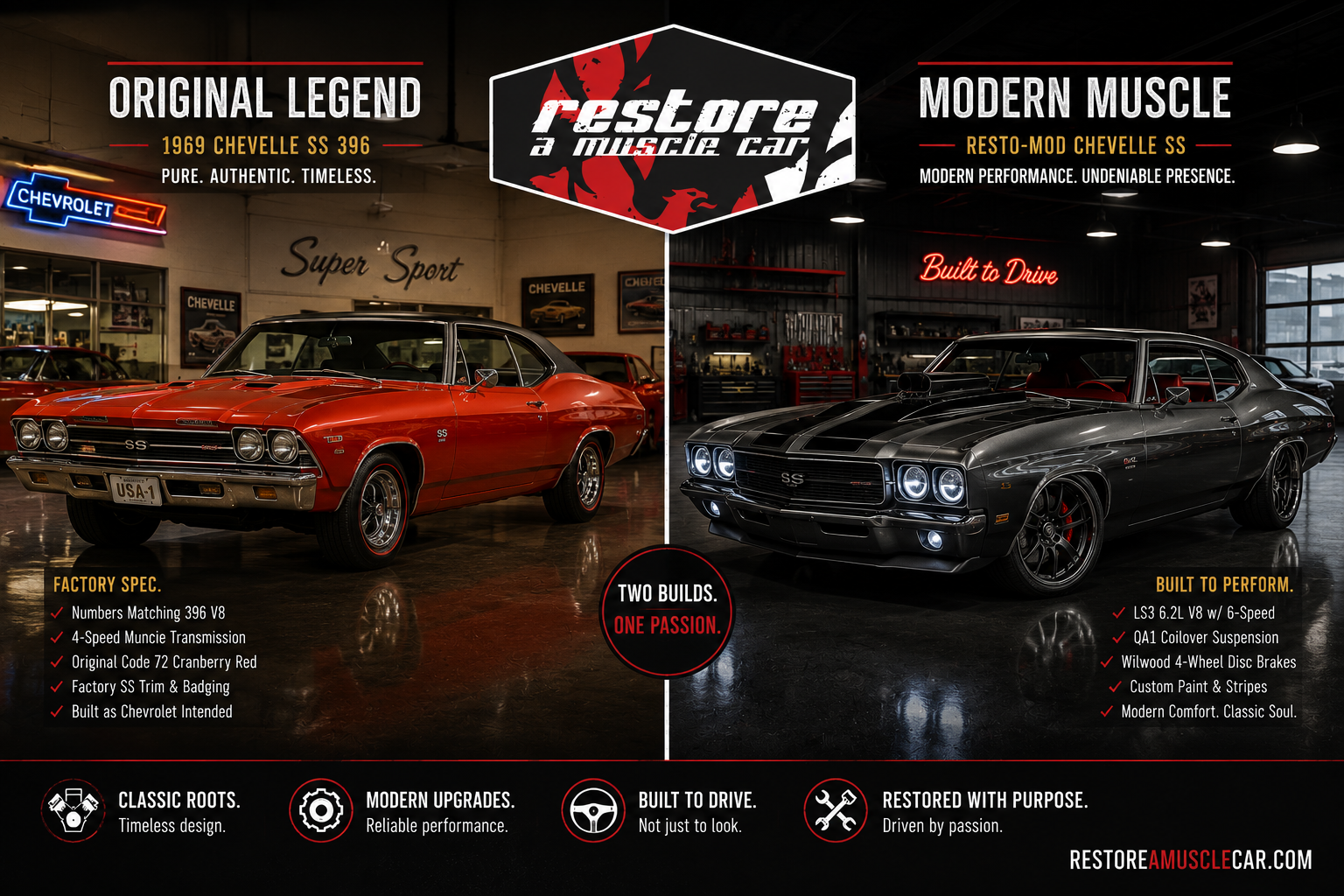
Factory-Correct vs. Resto-Mod: What’s the Difference?
A Resto-mod blends restoration with modernization. Instead of aiming for originality, it focuses on:
Improved performance (EFI systems, LS swaps, upgraded suspension)
Custom interiors or electronics (Bluetooth, modern gauges, push-button start)
Unique finishes, wheels, paint jobs, or brakes
Enhanced drivability and reliability for daily or weekend use
Here’s a simple breakdown:
Feature | Factory Correct | Resto-Mod
Engine Original block or date-correct unit Modern crate engine or swap
Interior Factory materials and layout Custom upholstery and features
Suspension/Brakes OE components or rebuild kits Coilovers, disc conversions
Paint & Trim Original codes and badges Custom color, shaved emblems
Audience Collectors, show judges Drivers, performance lovers
There’s no wrong answer — it depends on what matters most to you.
Investment Implications: Is Factory-Correct Worth More?
In most cases, a properly documented, factory-correct muscle car will fetch a higher resale value, especially for rare models (think LS6 Chevelles, Boss 429 Mustangs, or W30 Oldsmobiles). Matching-numbers, correct paint, and OEM finishes make a car stand out at auctions like Barrett-Jackson or Mecum.
That said, high-end resto-mods can also command six-figure prices — especially when they offer the best of both worlds: vintage aesthetics and modern performance.
Ultimately, resale depends on:
Model rarity and desirability
Documentation and provenance
Build quality and attention to detail
Some buyers want museum pieces. Others want road-ready beasts. Knowing your long-term goal — and your audience — will help shape the right restoration strategy.
📞 Call to Action: What Kind of Legacy Will You Build?
Are you restoring a rare original and want to get it perfect down to the factory chalk marks? Or do you want a vintage look with modern power under the hood? Either way, Restore a Muscle Car, can help you define and deliver a build that reflects your vision — and respects the car’s roots.
📩Contact us to discuss your car’s factory specs, get help decoding its history, or plan your next steps — whether you’re staying true to the factory or boldly going custom.