







The Muscle Car Pre-Restoration Inspection Checklist - Week 3
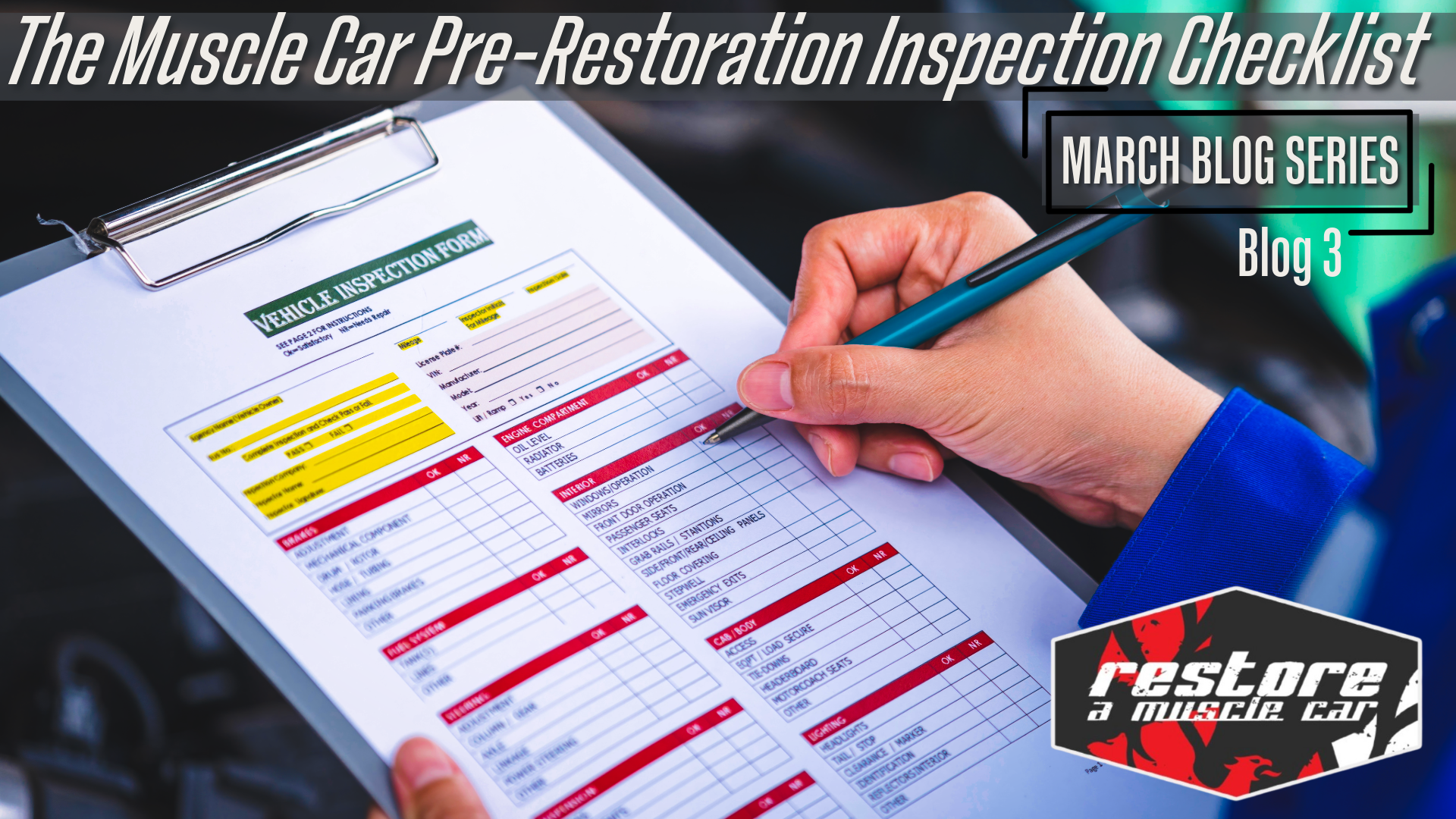
Week 3: Interior, Trim & Parts Assessment
Recap: In Week 2, we took a hard look at the engine, drivetrain, and wiring, identifying any mechanical or electrical issues. Now, we step into the cabin and exterior details. Week 3 is all about the interior, trim, and parts – essentially, making sure your project car has all its pieces and that they’re restorable.
Interior Condition Check
A classic car’s interior can reveal how well it was cared for – and how much work lies ahead. Start with the obvious: the seats, dashboard, door panels, carpets, and headliner. Are the seats torn, sagging, or moldy? Is the dash cracked or missing instruments? Often, muscle car interiors will need complete refurbishment: upholstery, foam, carpet, and possibly the dash pad or instrument cluster. Check the gauges and switches: is anything missing or non-functional? Turn knobs and push buttons – sometimes a stuck or non-moving control indicates deeper issues (like a frozen cable or broken mechanism behind the dash).
Look (and smell) for signs of water leaks or rodent infestation. Damp, musty carpet or mouse droppings under the seats mean you’ll be stripping the interior to sanitize and replace damaged padding. Surface mold on vinyl can be cleaned, but extensive water damage (say, from a leaky windshield seal) might have rotted the carpet and rusted the floor underneath. Also test the window cranks or power windows and door locks. These should be present and working (manual regulators can seize; electric motors often fail). Don’t forget ventilation – does the heater blower work? If the car has factory A/C, are all the major components there? (Non-working A/C is common in unrestored cars and can be fixed, but missing A/C parts could be costly to source.)
Pro Tip: Create an inventory list of interior parts. Note anything missing, like a radio, center console, seat belts, or interior trim pieces. Small missing items can be surprisingly expensive to replace or hard to find for certain models.
Trim and Exterior Parts Inventory
Now move to the trim and exterior parts. A project car might be missing bits of chrome or trim that the seller “meant to reinstall” – it’s crucial to identify those now. Inspect the exterior: are all emblems, chrome trim, mirrors, and moldings present? Check around windows, along the body sides, and at the front and rear (grilles, bumpers, badges). Open the trunk and hood: is the spare tire and jack there? What about under-hood components like the air cleaner, battery tray, or other original accessories? Every piece that’s missing is something you’ll have to hunt down or buy later.
Certain parts can be very difficult or expensive to replace. For example, original interior trim, specific badges, or rare model-specific items can fetch a high price – if you can even find them. As one restorer noted, seemingly trivial pieces aren’t cheap: “The door light switches are $150 each, the chrome trim on the doors $150 each, the sill plates $380 each and are unobtainium.”. While reproduction parts exist for many popular muscle cars, fit and quality can vary, and some parts (especially for less common models) might only be available used or not at all.
Examine the condition of trim as well. Pitted chrome, dented stainless moldings, or cracked light lenses will either need restoration or replacement. Factor these into your project plan. Straight, re-chromable bumpers and intact trim will save you money compared to sourcing replacements or paying for extensive refinish work.
Finally, verify the glass: windshield, side windows, rear window. Any major cracks or clouding (delamination)? Glass is available for most cars, but installation adds cost – and original date-coded glass can matter for high-end restorations. Ensure all basic weatherstripping (door seals, window felts, etc.) is present, even if dried out; missing weatherstripping could have allowed water inside, contributing to that interior damage.
Recap/Next: By now, you should know if your project is complete or a jigsaw puzzle with missing pieces. We’ve tallied up interior repairs and parts we need to find. This assessment is critical because missing trim or interior pieces can drastically affect your budget and timeline. In our final week, we’ll bring it all together in “Decision Time – Restore or Walk Away,” helping you weigh all factors and decide your next move.