







Introduction: A New Chapter for Classic Muscle
There is a special kind of satisfaction in seeing a classic muscle car return to life. The sound, the shape, and the memories are unmistakable—but every successful project also depends on choices made long before the first finished cruise. Built to Last is one of those conversations worth having early.
For owners researching classic muscle car replacement parts, the challenge is separating exciting possibilities from what will actually work for their car. A treasured survivor, a weekend driver, and a ground-up custom build do not need identical solutions. The right approach respects the car’s condition, its history, the owner’s priorities, and the resources available.
At Restore a Muscle Car, the starting point for a productive restoration conversation is a clear goal. The following guide offers practical questions to ask, details to examine, and common traps to avoid before committing time and money.
Step 1: Know the Four Categories
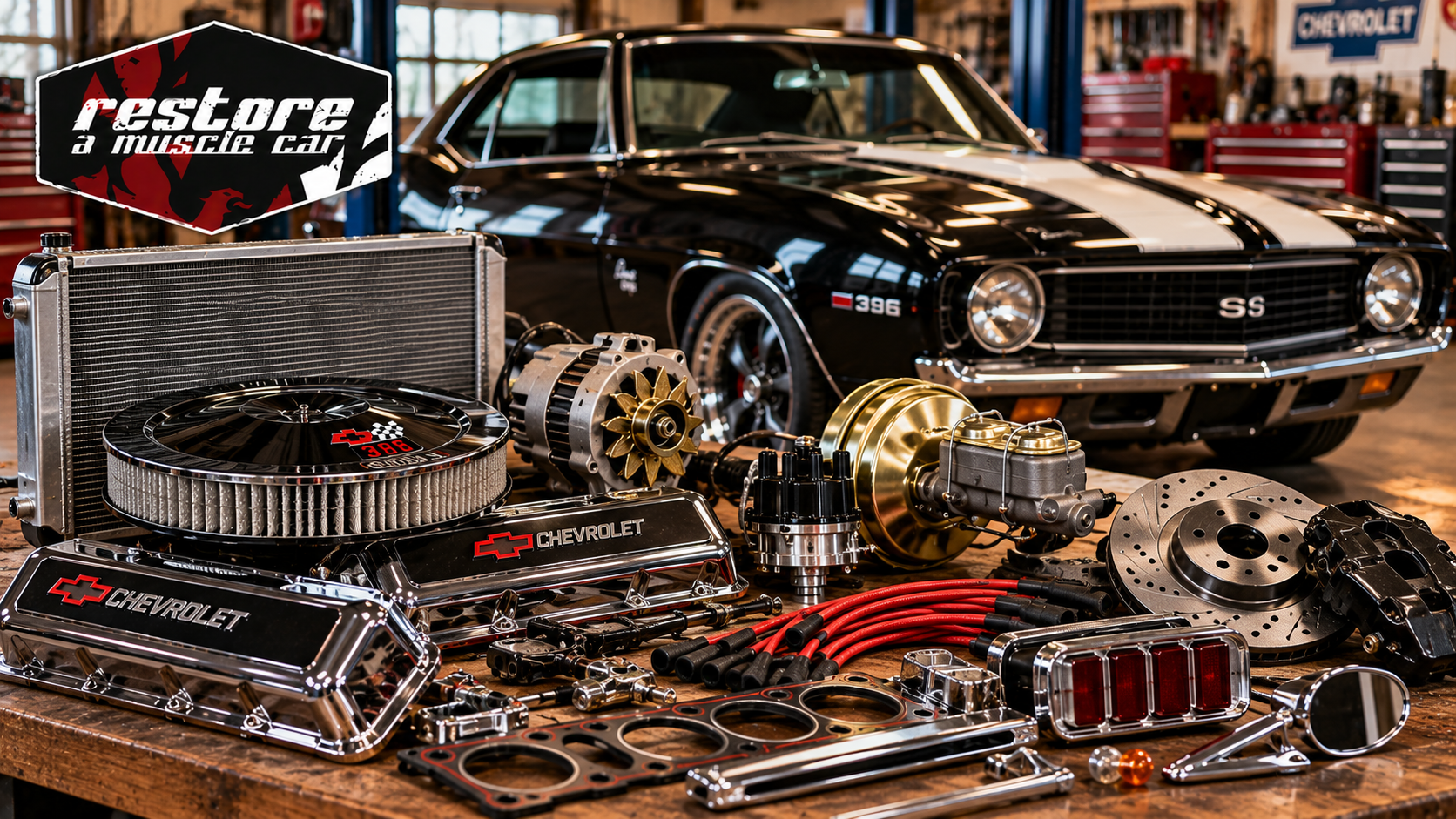
Original used parts preserve history; NOS parts are unused older stock; reproduction parts are newly manufactured; upgraded parts change performance or function.
In practice, this means slowing down enough to collect evidence before ordering parts or changing the vehicle. Take clear photographs, write down what you know, and identify what still needs verification. On a classic car, previous repairs and model-year differences can make two apparently identical examples surprisingly different.
For a factory-correct project, ask how this decision affects fit, future maintenance, originality, and the next phase of work. A small choice can create additional labor if it is made after paint, upholstery, or final assembly. Planning the sequence is often just as important as choosing the component itself.
A useful habit is to separate three categories: what is confirmed, what is suspected, and what needs a specialist to inspect. That simple distinction keeps a restoration plan realistic and prevents a hopeful assumption from becoming an expensive commitment.
Step 2: Fit Is More Than a Catalog Listing
Verify year, body style, production changes, mounting points, electrical connectors, and finish. Trial-fit panels and trim before painting.
In practice, this means slowing down enough to collect evidence before ordering parts or changing the vehicle. Take clear photographs, write down what you know, and identify what still needs verification. On a classic car, previous repairs and model-year differences can make two apparently identical examples surprisingly different.
For a driver-focused project, ask how this decision affects fit, future maintenance, originality, and the next phase of work. A small choice can create additional labor if it is made after paint, upholstery, or final assembly. Planning the sequence is often just as important as choosing the component itself.
A useful habit is to separate three categories: what is confirmed, what is suspected, and what needs a specialist to inspect. That simple distinction keeps a restoration plan realistic and prevents a hopeful assumption from becoming an expensive commitment.
Step 3: Spend More Where Failure Matters
Brake, steering, suspension, and fuel-system components deserve careful sourcing and professional installation. Low price should not outweigh traceability and quality.
In practice, this means slowing down enough to collect evidence before ordering parts or changing the vehicle. Take clear photographs, write down what you know, and identify what still needs verification. On a classic car, previous repairs and model-year differences can make two apparently identical examples surprisingly different.
For a factory-correct project, ask how this decision affects fit, future maintenance, originality, and the next phase of work. A small choice can create additional labor if it is made after paint, upholstery, or final assembly. Planning the sequence is often just as important as choosing the component itself.
A useful habit is to separate three categories: what is confirmed, what is suspected, and what needs a specialist to inspect. That simple distinction keeps a restoration plan realistic and prevents a hopeful assumption from becoming an expensive commitment.
Step 4: Consider Repairing Originals
A restorable factory grille or stainless molding may fit better than a reproduction. Compare repair costs with replacement and long-term value.
In practice, this means slowing down enough to collect evidence before ordering parts or changing the vehicle. Take clear photographs, write down what you know, and identify what still needs verification. On a classic car, previous repairs and model-year differences can make two apparently identical examples surprisingly different.
For a driver-focused project, ask how this decision affects fit, future maintenance, originality, and the next phase of work. A small choice can create additional labor if it is made after paint, upholstery, or final assembly. Planning the sequence is often just as important as choosing the component itself.
A useful habit is to separate three categories: what is confirmed, what is suspected, and what needs a specialist to inspect. That simple distinction keeps a restoration plan realistic and prevents a hopeful assumption from becoming an expensive commitment.
Step 5: Keep a Parts Record
Save invoices, manufacturer details, part numbers, and photos. This makes troubleshooting and future maintenance easier.
In practice, this means slowing down enough to collect evidence before ordering parts or changing the vehicle. Take clear photographs, write down what you know, and identify what still needs verification. On a classic car, previous repairs and model-year differences can make two apparently identical examples surprisingly different.
For a factory-correct project, ask how this decision affects fit, future maintenance, originality, and the next phase of work. A small choice can create additional labor if it is made after paint, upholstery, or final assembly. Planning the sequence is often just as important as choosing the component itself.
A useful habit is to separate three categories: what is confirmed, what is suspected, and what needs a specialist to inspect. That simple distinction keeps a restoration plan realistic and prevents a hopeful assumption from becoming an expensive commitment.
RAMC Perspective: Build a Plan Before You Build the Car
The smartest approach to classic muscle car replacement parts is not necessarily the most expensive or the most modern. It is the one that suits the actual vehicle. Before deciding on the next step, document its condition, determine which components must be retained, and outline the desired result. For rare or historically significant cars, preservation and authenticity may deserve priority. For a regularly driven classic, serviceability and dependable operation may weigh more heavily.
When comparing options, ask for a written scope, realistic assumptions, and a clear explanation of what could change after disassembly. Save photographs and receipts as the project develops. Those records help with future maintenance and make it easier to explain the work to another owner or enthusiast.
📞 Call to Action: Keep Your Classic Moving Forward
Every muscle car has a different story, and every restoration deserves a plan that fits. Whether you are researching a future purchase, deciding what to repair next, or planning a larger transformation, Restore a Muscle Car can be a starting point for discussing your goals and potential project options.
📩 Get in touch with Restore a Muscle Car and tell us about your car, your vision, and the questions you want answered. The next chapter starts with a good plan.