







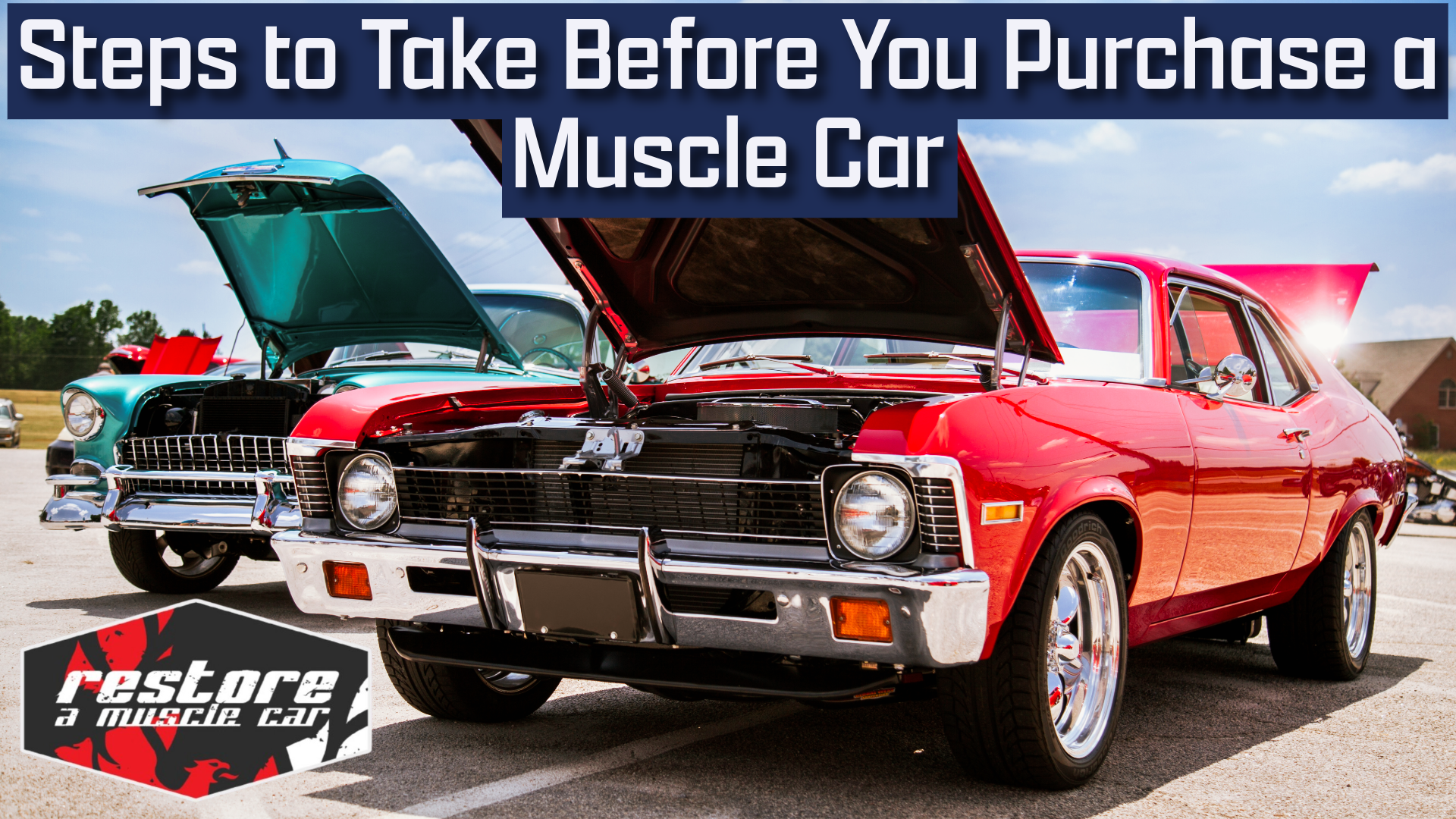
There’s nothing quite like the roar of a big block engine or the sleek, aggressive lines of a classic American muscle car. Whether it’s a 1970 Chevelle SS, a ’69 Charger, or a first-gen Camaro, owning a muscle car is a dream for many enthusiasts. But before you sign the title and rev the engine, there are several important steps to take to ensure you’re making a smart investment—and getting the car of your dreams, not a money pit.
1. Define Your Purpose and Set a Budget
Start by asking yourself: What do I want this car for?
Is it a weekend cruiser? A showpiece? A daily driver? A long-term restoration project? Knowing your end goal will guide your choices.
Once you’ve clarified your purpose, set a realistic budget. This should include:
Purchase price
Restoration or upgrade costs
Maintenance and parts
Insurance and storage
Don't forget to set aside a “surprise fund”—muscle cars have a way of revealing hidden quirks after purchase.
2. Do Your Research
Knowledge is power. Dive into forums, buyer’s guides, YouTube restoration channels, and car shows. Learn:
The market value of your desired model
Known issues or problem areas
Rarity and availability of parts
Trim levels and factory options that add value
Being informed helps you spot a good deal—and a potential red flag.
3. Verify Authenticity
In the muscle car world, numbers matter. Always check:
VIN (Vehicle Identification Number)
Engine, transmission, and body codes to confirm “matching numbers”
Trim tags for factory specs
A cloned or rebadged car may still look the part, but its value—and collectibility—could be significantly lower.
4. Ask for Documentation
The more paperwork, the better. Request:
Title and registration documents
Service and repair history
Receipts for parts or upgrades
Photos of previous restoration work (if applicable)
A well-documented car gives you peace of mind and can increase resale value down the road.
5. Inspect Thoroughly
If you’re not comfortable doing a full inspection yourself, bring a trusted mechanic or classic car expert. Key areas to check:
Rust – especially frame, floor pans, trunk, and wheel wells
Engine and transmission – listen for knocks, leaks, and odd shifts
Suspension and brakes – worn bushings or leaky lines can be costly
Interior condition – original vs. aftermarket, dash cracks, seat wear
Even better? Request a pre-purchase inspection (PPI) from a restoration shop like Restore a Muscle Car.
6. Take It for a Test Drive
This is where the car should speak for itself. Listen to the engine, feel the brakes, and test the steering response. If the seller won’t allow a test drive—proceed with caution.
Pay attention to:
Cold start behavior
Idling smoothness
Shifting performance
Overall ride and responsiveness
7. Estimate Future Costs
Even a “turnkey” muscle car will require some TLC. Be realistic about:
Parts availability – are they easy to source or rare?
Fuel and fluids – big engines aren’t exactly fuel-efficient
Maintenance schedule – oil changes, tuning, belts, hoses
Restoration plans – if it’s a project, map out a timeline and budget
At Restore a Muscle Car, we help clients not just find their dream car, but understand the path forward for restorations and upgrades.
8. Plan for Storage and Insurance
Muscle cars deserve good homes. Consider:
Indoor garage or car cover
Climate-controlled storage to avoid rust and moisture damage
Theft prevention measures like GPS tracking or kill switches
Also, get a quote for classic car insurance. It’s often based on “agreed value” rather than blue book price, and usually has restrictions on mileage and usage.