







Digital Design — Using 3D Scanning & CAD for Muscle Car Restorations
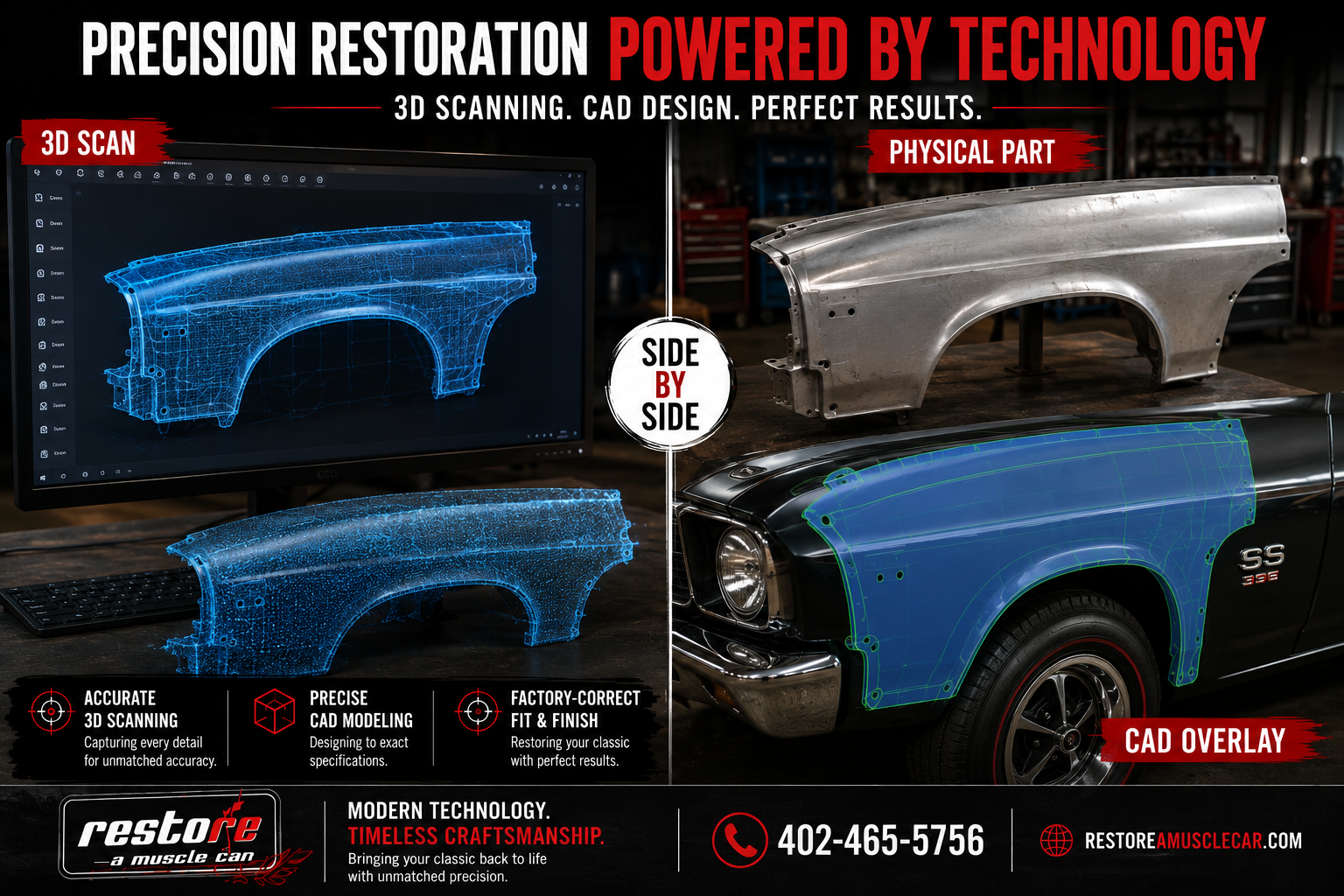
Restoring a classic car used to mean making do with what you had — or spending weeks hunting for the perfect part. Today, restoration pros have a secret weapon: 3D scanning and CAD design. These tools bring digital precision to vintage steel, helping recreate missing or damaged components with factory-grade accuracy. Whether it's replicating a rare hood scoop or designing a custom bracket, this technology is transforming how we restore muscle cars.
🧠 What Is 3D Scanning?
3D scanning uses a handheld laser or structured light device to capture the shape and dimensions of an object, like a fender or emblem. The scanner maps every curve, contour, and cavity, creating a digital twin of the part.
Once scanned, the file is uploaded into CAD (Computer-Aided Design) software, where it can be tweaked, refined, or mirrored. This is a game-changer for restorers — especially when dealing with symmetry or rare, one-off parts.
🛠️ CAD in Restoration
Used to design exact replacement parts
Helps fabricate components with laser cutting or CNC machining
Allows restorers to preview how new parts will fit
Can simulate material tolerances or test fit digitally
🔁 Perfect for Unavailable or Custom Parts
3D scanning is ideal when:
The original part is damaged beyond repair
You want to mirror one side (e.g., left to right mirror housing)
You're designing a modern bracket or mount for a new component
🧪 Real-Life Example
A RAMC customer needed a reproduction rear quarter window trim — a part long out of production. Using 3D scanning, the team recreated the trim with OEM fit and finish, bypassing months of hunting or poor-fitting repros.
📞 Call to Action
Ready to bring precision to your project? Contact Restore a Muscle Car, and ask how 3D tech can help recreate the parts your project needs most.